
Shipping: how the second bill is calculated
Weight, volume, route and destination, in that order of influence. Here is how each one moves the number, using the operator’s own published figures.
Weight
Chargeable weight is not what your scales say
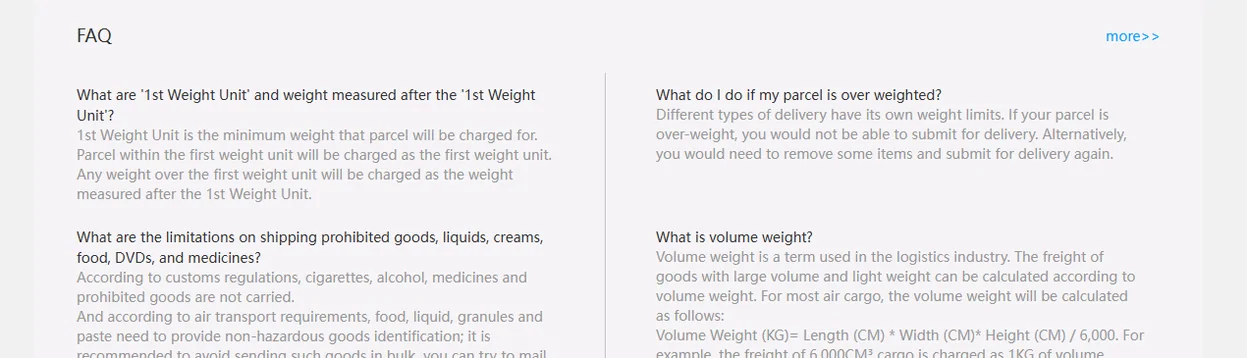
Two numbers compete and the larger one wins. Actual weight is what the box weighs. Volumetric weight is calculated from the box dimensions, and the operator publishes the formula it bills on in its shipping questions.
This is why a down jacket and a pair of jeans can cost the same to send while weighing very differently, and why removing an original shoe box is often the cheapest thing you will do all order. Package removal is priced at zero on the service menu.
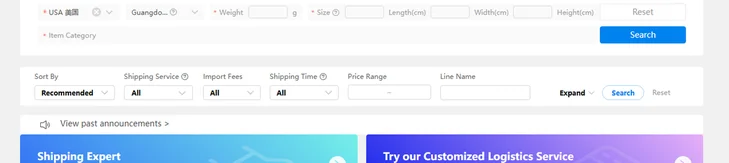
The quote also needs all three dimensions and an item category, not just a weight. The category is not bureaucracy: it decides which routes will accept the parcel at all.
First weight unit and volumetric weight, from the shipping questions. official page·checked 2026-10-10
Routes
Routes, and how far apart they really are
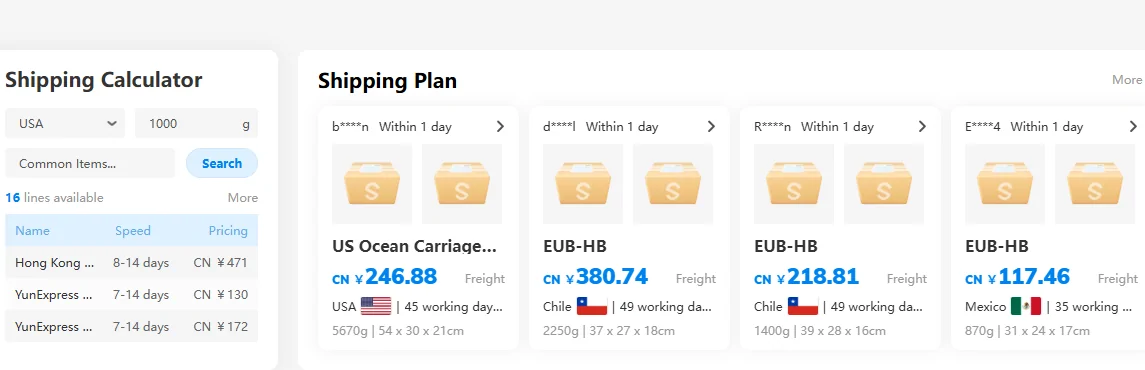
The calculator on the forwarding page returned 16 lines available for the query it loads with. The front page describes the catalogue as 100+ shipping lines. One number is what a single lookup returned, the other is the catalogue, and this site does not pretend to know how they reconcile.
| Line | Quoted window | Price |
|---|---|---|
| Hong Kong UPS Economy (Duty-Free) | 8-14 days | CN¥471 |
| YunExpress clothing Registered Air Mail | 7-14 days | CN¥130 |
| YunExpress Air Cargo (General) | 7-14 days | CN¥172 |
The live feed beside that calculator is more useful than any marketing copy, because it is other people’s finished parcels. These seven were on screen on 2026-10-10:
| Line | Destination | Weight | Box | Freight | Signed in |
|---|---|---|---|---|---|
| EUB-HB | Switzerland | 280 g | 22 x 14 x 10 cm | CN¥84.46 | 35 working days |
| EUB-HZ | Thailand | 1170 g | 28 x 18 x 21 cm | CN¥69.68 | 17 working days |
| EUB-HB | Mexico | 1840 g | 37 x 28 x 20 cm | CN¥193.44 | 35 working days |
| EMS Economy-HZ | Canada | 2720 g | 42 x 32 x 20 cm | CN¥395 | 12 working days |
| SAL | France | 2590 g | 37 x 28 x 19 cm | CN¥332.46 | 139 working days |
| US Ocean Carriage (Regular Ship) | USA | 5670 g | 54 x 30 x 21 cm | CN¥246.88 | 45 working days |
| HK DHL Preferential Line | Australia | 9300 g | 131 x 19 x 16 cm | CN¥875.4 | 11 working days |
Read the Thailand row against the Australia row. Nine kilograms to Australia cost roughly twelve times what one kilogram to Thailand cost, and arrived six days sooner, because it went by express rather than by a slow line. Speed and weight are separate dials, and routes bundle them differently.
The France and Brazil rows both show 139 working days quoted on a sea and surface line. That is not an error in this table. It is what the slowest tier actually quotes.
Calculator results and the parcel feed, both read on the day shown. official page·checked 2026-10-10
The lever
Consolidation is free, and it is the main lever you have
Because the first weight unit carries most of the charge, a second item added to an existing parcel only pays continued weight. The operator consolidates at no charge and says so on its front page.
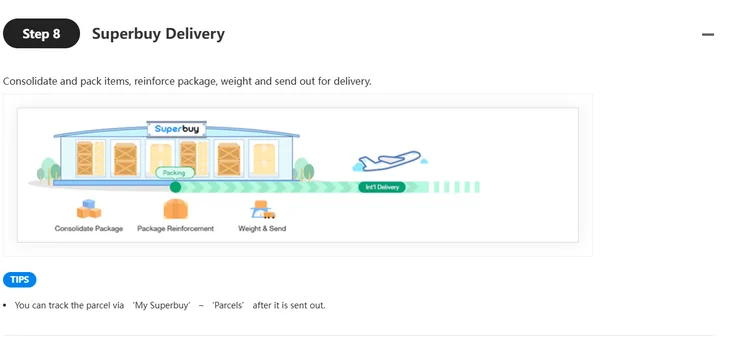
Step eight of the guide shows what consolidation involves: items are combined, the package is reinforced, then weighed and sent. Every packing choice at that stage moves the volumetric number, in both directions. Bubble wrap protects and it also adds volume.
The practical pattern is to run several stage one orders, let them pool in the warehouse inside the free storage window, then ship once. That pattern is the reason the free window exists.
Consolidation described in step eight of the official guide. official page·checked 2026-10-10
Second entrance
Forwarding, for things you bought yourself
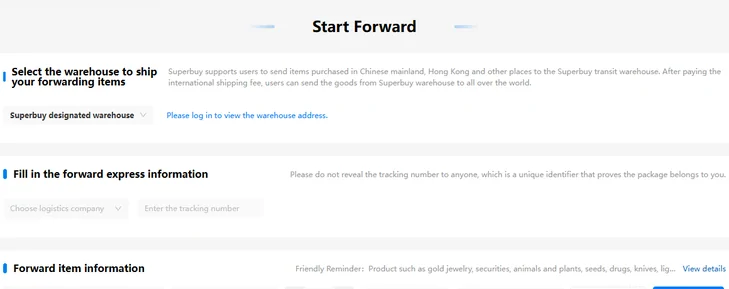
There is a second entrance that has nothing to do with the catalogue. If you already bought something in China and have a tracking number, you can send it to the operator’s warehouse and use it purely as a forwarder. You pick a warehouse, enter the inbound tracking number, then describe the item.
The same restrictions apply at that door. The reminder on that page names gold jewellery, securities, animals and plants, seeds, drugs, knives, lighters, batteries, bulk liquids and chemical powders as things that cannot go overseas.
Forwarding steps and the restriction reminder, from the forwarding page. official page·checked 2026-10-10
Restrictions
What narrows your options, and what closes them
Restricted is not the same as prohibited. Batteries, liquids and aerosols usually remove routes rather than block shipment, which shows up as a shorter list of lines and a higher price. Prohibited items do not ship at all.
If one item in your warehouse is blocking the route you want, splitting it out into its own order costs CN¥2 per inbound record. That is usually cheaper than downgrading the whole parcel to a slower line.
Restriction list and the 2026-07-27 suspension notice. official page·checked 2026-10-10
Questions about shipping
How is the shipping fee charged?
Upfront on estimated weight when you submit the parcel, then reconciled against the weight the carrier verifies. Differences settle in either direction.
Who pays import tax?
The recipient. The operator lists customs clearance as a component of the international shipping fee and states it is borne by the recipient, based on your country’s rules for the declared category and value.
Is the cheapest line ever the right answer?
Only if you can wait. The feed above has a 139 working day quote on it. For most people the right question is which line is acceptable, not which is lowest.