
Superbuy Spreadsheet categories
Sixteen ways into the catalogue, and a short honest account of what a catalogue can and cannot tell you before you commit money to an item.
Browse the catalogue by category
Sixteen entry points into the product listings. Fifteen open a category; womenswear has no branch of its own, so that one runs as a keyword search.
 CategorySneakersBox weight decides the bill long before the shoe does.
 CategoryJacketsDown and padding are light but bulky; volumetric weight bites here.
 CategoryHoodiesHeavy cotton is where a cheap item turns into an expensive parcel.
 CategoryT-shirtsCheck the packed weight; even small items add to the parcel total.
 CategoryJeansDenim weight varies more between listings than the price does.
 CategorySweatpantsFleece lining adds weight and bulk; compare the listing measurements.
 Search resultsWomenswearNo standalone branch exists, so this one runs as a keyword search.
 CategoryJerseysPrinting and patches are what quality-check photos are for.
 CategoryBagsHardware and lining are the two things photos have to show.
 CategoryHatsCrushable in transit unless you ask for a box.
 CategoryBeltsSold by length, not by waist size; measure before you order.
 CategoryEyewearFragile and small: the packing choice matters more than the line.
 CategoryPerfumeLiquids are restricted on most routes; check before you pay.
 CategoryJewelleryGold jewellery is on the prohibited list for export.
 CategoryWatchesAsk for a caseback photo; a battery inside narrows the routes.
 CategoryElectronicsBuilt-in batteries rule out most economy routes.
What it is
A catalogue is a finding tool, not a shop
Nothing on a product catalogue is for sale by the catalogue. Each card is a pointer to a listing on a Chinese marketplace. The useful part is that somebody has already sorted thousands of listings into categories and filtered out the dead ones, which is work you would otherwise do yourself with machine translation.
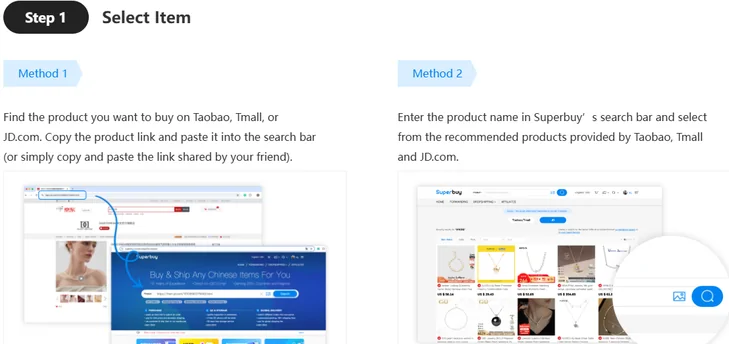
Once you have a link, Superbuy accepts it two ways. You can paste it straight into the search field on its front page, or you can search by keyword and let it pull listings back from Taobao, Tmall and JD.com. The official guide shows both, side by side, as the first step.
The catalogue card and the agent order are different objects. If the listing changes price or sells out between the two, the agent order is what counts.
Both entry methods are step one of the operator’s own guide. official page·checked 2026-10-10
A test you can run
How to judge a spreadsheet site before you trust it
Catalogues are cheap to produce and expensive to maintain, so most of them rot. Four checks separate a maintained one from an abandoned one, and they take about two minutes.
- Open three links at random. Dead listings are the first symptom. A catalogue nobody prunes will have them in double digits.
- Look for a date. Not a copyright year. A date attached to the content, saying when someone last checked it.
- Check whether prices are quoted at all. Marketplace prices move weekly. A catalogue that prints a fixed price next to every card is either refreshing it constantly or lying to you.
- See whether it admits what it does not know. Weight, exact dimensions and item category decide your shipping bill, and a catalogue card almost never carries them.
That last one applies to this site too. The categories above link to listings. They cannot tell you what a jacket weighs, and this page will not pretend otherwise.
Before you commit
How to pick an item that survives the journey
Two listings at the same price can cost very different amounts to receive. The difference is weight, shape and fragility, and you can read most of it off the listing photos before you order.
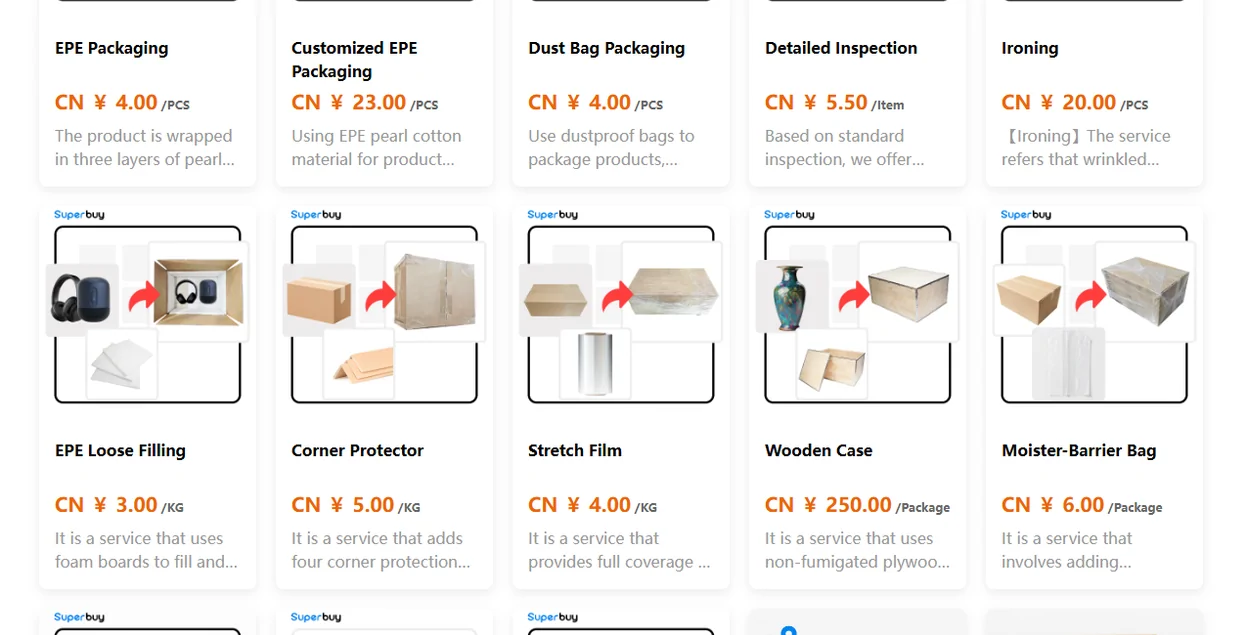
Heavy cotton, padded outerwear and anything in a rigid box are the three things that quietly double a parcel. A shoe box is mostly air, and air is billed by volume. The operator sells a folding shoe box service at CN¥5 a piece precisely because this is such a common problem.
Fragile items run the other way: they are light, so the freight is cheap, but they need packing that the default service does not include. The menu prices that too, from corner protectors to a wooden case.
How weight is actually billed is worth reading before your first order, not after.
Packing service names and prices read from the fee page. official page·checked 2026-10-10
Questions about the catalogue
Why does womenswear link to a search instead of a category?
The catalogue sorts by item type rather than by who wears it, so there is no womenswear branch to link to. A keyword search is the honest substitute, and the card says so.
Can I give Superbuy a link from somewhere else?
Yes. Links outside the main platforms fall into a different service fee bracket and may need the manual order form. The two order paths are here.
Does the catalogue sell replicas?
That is the wrong question to ask a catalogue. The relevant fact is that the operator runs a counterfeit item policy and a dedicated reporting address, so goods it classifies as counterfeit are its own business to refuse, not yours to assume.